Pearl Zadeh DDS

Tag: Cosmetic Dentist

  • How Long Does Teeth Whitening Last? How to Keep Your Smile White

    How Long Does Teeth Whitening Last? How to Keep Your Smile White

    Teeth whitening isn’t permanent. How long your results stay noticeable varies quite a bit from person to person, and there’s no single timeline that applies to everyone who walks out of a whitening appointment with a brighter smile.

    Lifestyle habits, oral hygiene, the specific type of discoloration you started with, and any maintenance you keep up with afterward all affect how quickly your teeth start looking less bright again. Setting realistic expectations from the start makes the whole process considerably less frustrating later.

    How Long Does Teeth Whitening Last?

    Whitening results fade gradually rather than disappearing all at once. A peer-reviewed narrative review of tooth whitening procedures found that both in-office and take-home tray bleaching showed good stability for up to two years in many patients, though this doesn’t happen for everyone. The same review cited earlier research finding regression in about 26% of cases by 18 months, and noted that the rate of color relapse is genuinely unpredictable, depending heavily on how often someone consumes staining foods and drinks, whether they smoke, and how consistent their oral hygiene actually is.

    A separate five-year clinical study on at-home whitening with 10% carbamide peroxide found the whitening effect remained clinically noticeable after five years, despite a gradual and expected amount of relapse along the way. Professional whitening, dentist-supervised at-home whitening, and over-the-counter products all differ somewhat in how they’re applied, but no method has been shown to reliably outlast the others for every patient. Our comparison of professional and at-home whitening options goes further into how these approaches actually differ.

    Why Do Teeth Become Stained Again After Whitening?

    It helps to separate two different things: the initial whitening result fading, and genuinely new discoloration developing on top of it. Pigments from food and drink can gradually accumulate on tooth surfaces again after treatment, the same way they did before you ever whitened. Right after whitening, tooth surfaces can be temporarily more porous and more receptive to picking up new pigment, which is part of why the first few days matter more than most people realize. Tobacco use contributes its own staining. Plaque buildup left behind by inconsistent brushing gives new stains something to cling to more easily.

    Natural aging continues regardless of any whitening you’ve had, since enamel thins gradually over the years and lets more of the naturally darker dentin underneath show through. Changes within the tooth itself, separate from anything happening on the surface, can also shift color slowly over time. Whitening doesn’t create permanent immunity to any of this. It resets the color at a point in time, and everyday life continues acting on your teeth from there.

    Which Foods and Drinks Can Stain Your Teeth?

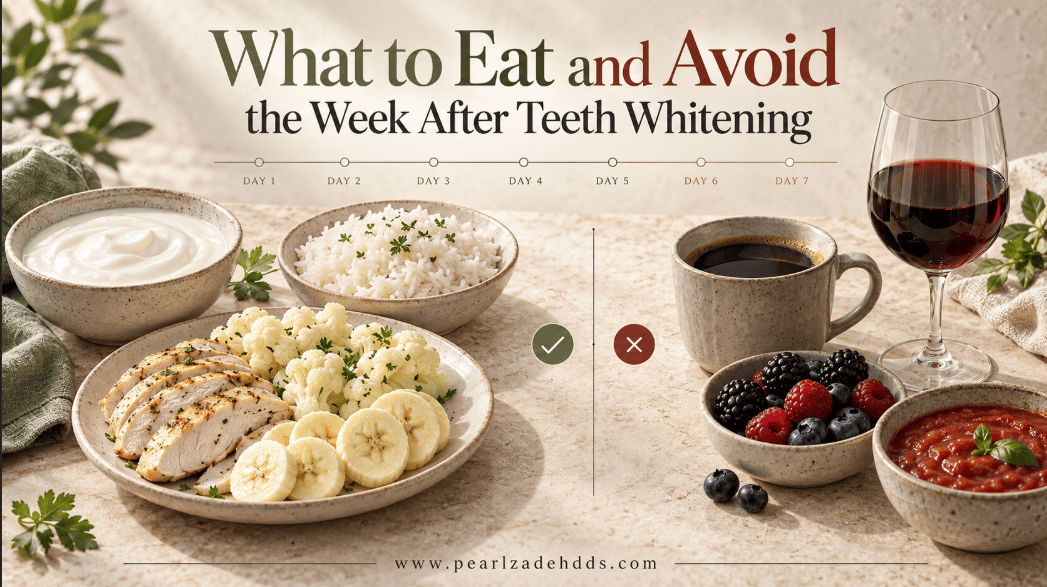
    Frequently consuming strongly pigmented foods and beverages contributes to staining over time. Common culprits include coffee, tea, red wine, dark berries, tomato-based sauces, soy sauce, and other deeply colored drinks. None of this means you need to eliminate these foods permanently or follow some restrictive whitening diet.

    What actually matters is frequency and exposure, not any single cup of coffee or glass of wine. Rinsing your mouth with water after eating or drinking something pigmented, and not sipping a staining drink slowly over hours, both make a genuine difference without requiring you to give anything up entirely.

    Can You Drink Coffee After Teeth Whitening?

    Yes, in most cases, though it’s worth understanding why coffee affects your results. Coffee contains tannins and other compounds that readily adhere to tooth surfaces, particularly right after whitening when enamel can be temporarily more porous. There’s no universally agreed-upon waiting period backed by strong evidence, so treat any specific number of hours you see online with some skepticism.

    Practical habits help more than a strict rule: using a straw for iced coffee, rinsing with water afterward, and not nursing a cup over an extended stretch all reduce how much staining potential actually reaches your teeth. Nobody needs to give up coffee entirely because they whitened their teeth.

    Does Smoking Make Teeth Whitening Results Fade Faster?

    Yes, tobacco use is a genuine factor here. The American Dental Association notes that extrinsic tooth staining can be worsened by lifestyle habits including smoking and chewing tobacco, alongside poor oral hygiene and frequent exposure to pigmented food or drink. Smoking tends to contribute to yellow or brown discoloration that builds up steadily, which makes maintaining a brighter appearance genuinely harder for people who smoke regularly.

    This staining is separate from the broader oral health effects tobacco use can have, and it’s worth knowing about specifically because it tends to accumulate faster and more persistently than typical dietary staining alone. This isn’t meant as a judgment on anyone’s habits. It’s simply a real factor worth knowing about if whitening longevity matters to you.

    How Does Your Oral-Care Routine Affect Whitening Results?

    Brushing twice daily, cleaning between your teeth, keeping up with regular dental cleanings, using appropriate oral-care products, and maintaining healthy gums all help reduce plaque and surface staining that would otherwise build up faster.

    Our discussion of early signs of gum disease covers what’s worth watching for as part of that broader routine. None of this means brushing alone preserves professional whitening indefinitely. Good oral hygiene slows the return of new surface staining. It doesn’t stop the natural fading process that affects every whitening treatment eventually.

    Does Whitening Toothpaste Help Keep Teeth White?

    It can help with certain surface stains, but it doesn’t work the same way professional whitening does. The ADA notes that over-the-counter whitening products like toothpastes are effective primarily at removing extrinsic, surface-level stains, and generally have little meaningful effect on intrinsic staining or the underlying color of the tooth itself.

    There’s a real difference between removing surface stains that have accumulated since your last cleaning and actually changing the shade of your natural tooth structure, which is what professional whitening accomplishes. Whitening toothpaste is a reasonable maintenance habit between treatments. It isn’t a substitute for professional whitening, and it won’t maintain the exact result your original treatment achieved indefinitely.

    When Should You Get a Teeth Whitening Touch-Up?

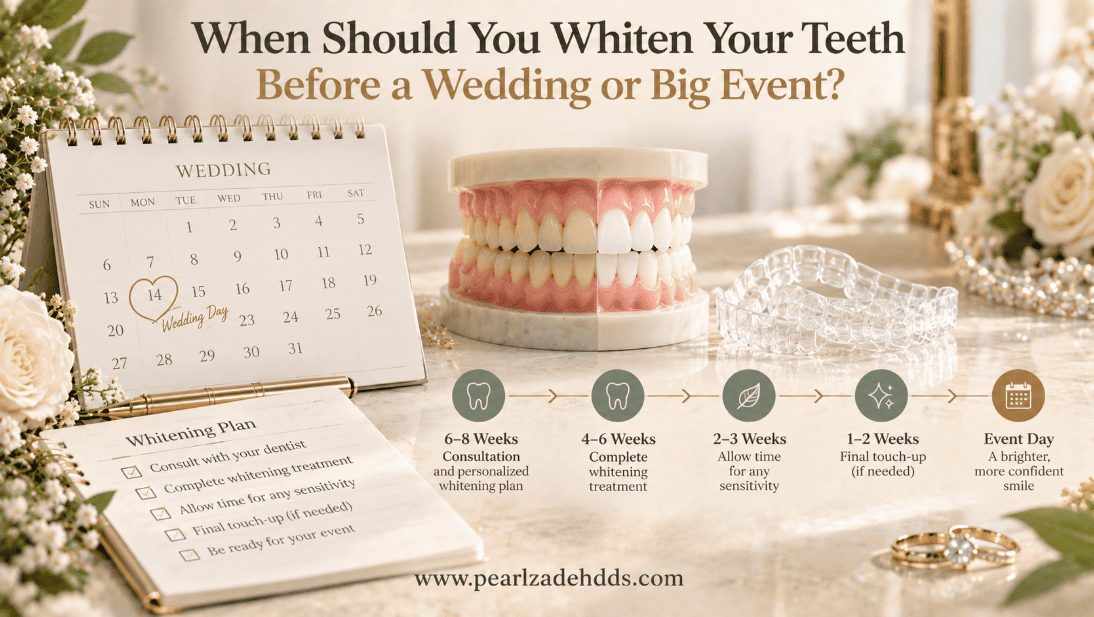
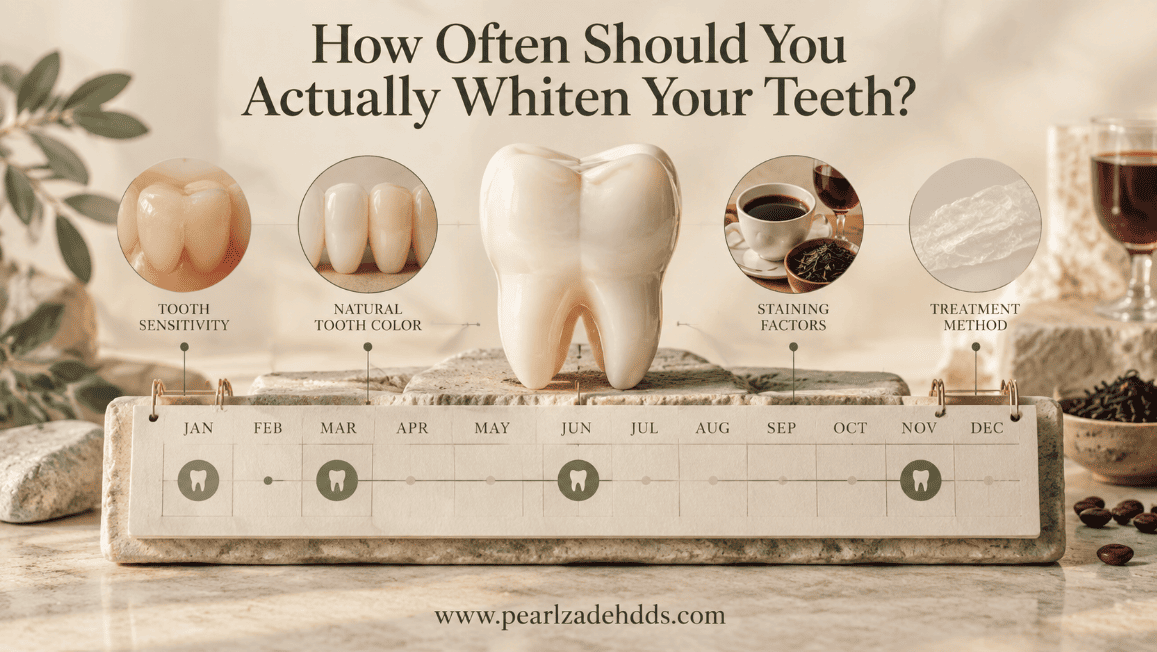
    Some patients choose a maintenance or touch-up treatment once they notice their teeth gradually darkening again. Timing genuinely depends on how quickly staining actually returns for you, your diet, whether you use tobacco, what type of whitening you originally had, how bright a shade you’re hoping to maintain, any sensitivity you experience, and what your dentist actually recommends based on your teeth.

    A patient who drinks coffee daily and doesn’t floss consistently will likely notice fading sooner than someone with lighter dietary habits and a thorough hygiene routine, even if both had identical original treatments. There’s no universal touch-up schedule that applies to every patient. Repeatedly whitening on your own without any professional guidance isn’t necessarily appropriate, since it skips the evaluation that would normally catch whether something other than ordinary fading is actually going on.

    Can Whitening Your Teeth Too Often Cause Problems?

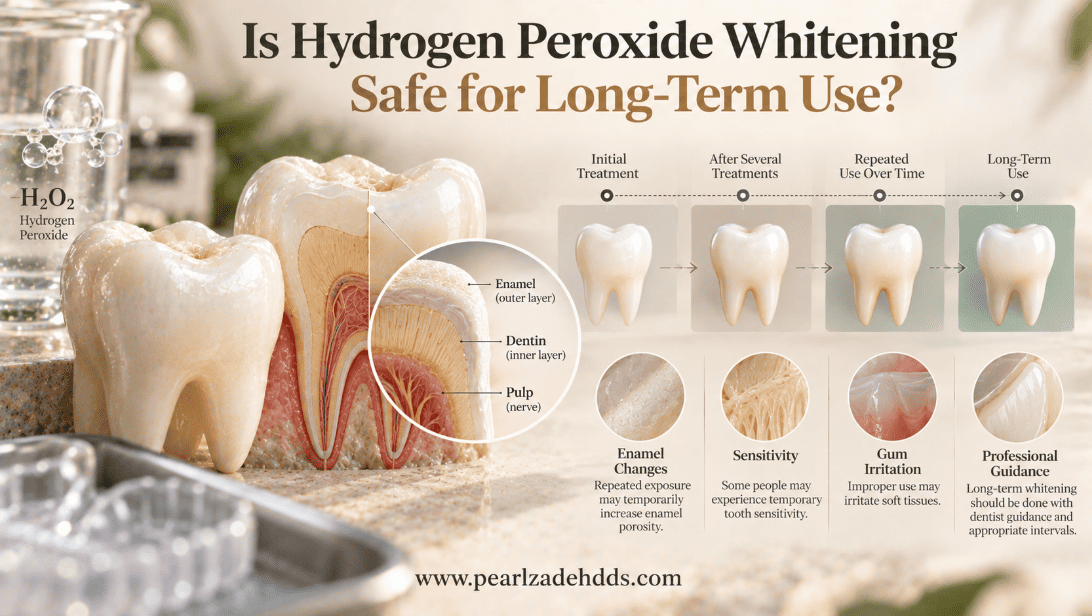
    More whitening isn’t automatically better, and this is worth taking seriously. Overusing whitening products or using them incorrectly can contribute to temporary tooth sensitivity and gum irritation. This doesn’t mean that normal, appropriately supervised professional whitening damages enamel when it’s used as directed.

    There’s a real difference between a dentist-guided treatment plan and repeatedly applying over-the-counter products on your own without any professional input. If you’re tempted to whiten again simply because results have faded faster than you’d like, that’s a reasonable moment to talk to your dentist first rather than reaching for another kit.

    What If You Have Veneers, Crowns, or Fillings?

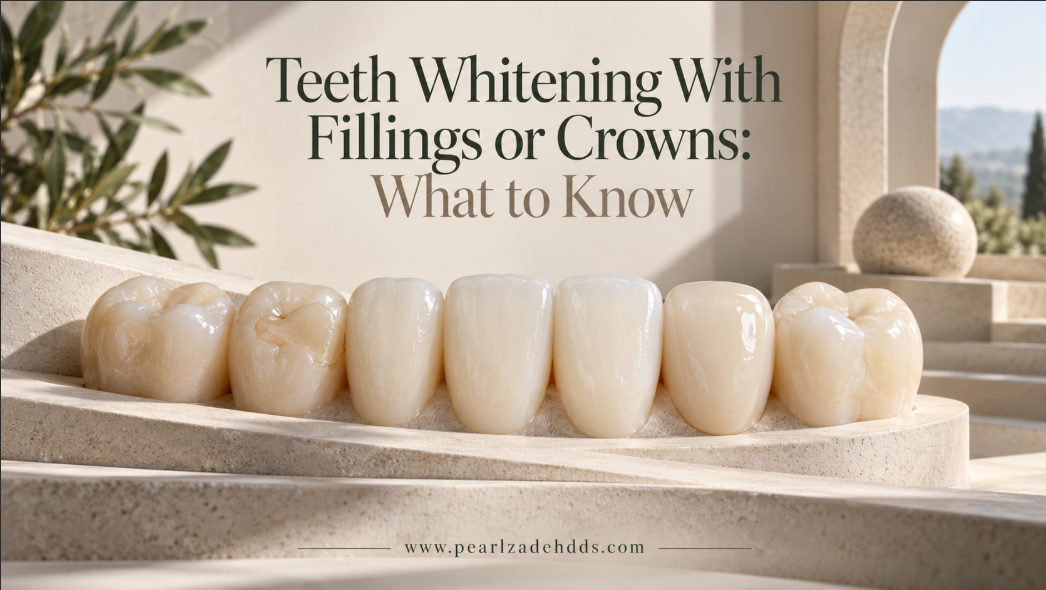
    Whitening affects natural tooth structure differently than it affects dental restorations. Veneers, crowns, tooth-colored fillings, and other visible restorations generally don’t change shade the way natural enamel does when exposed to whitening agents. If you have restorations, especially visible ones near the front of your smile, your dentist may need to plan whitening carefully to avoid an uneven result between your natural teeth and the restored ones.

    Our overview of cosmetic treatment options for stained teeth goes further into what else might apply if restorations are part of your situation. Restorations don’t whiten like natural teeth, and no whitening treatment changes that.

    What Can You Do to Make Whitening Results Last Longer?

    1. Maintain consistent oral hygiene, since plaque gives new stains an easier surface to build on.

    2. Limit frequent exposure to heavily staining foods and drinks rather than eliminating them outright.

    3. Think about how you consume coffee, tea, and other staining beverages, not just how often.

    4. Avoid tobacco products, since they contribute their own steady discoloration over time.

    5. Keep up with regular dental visits, which help catch and remove buildup before it becomes noticeable staining.

    6. Follow whatever professional whitening instructions you were actually given, rather than improvising.

    7. Use touch-up treatment only when it’s actually appropriate for your situation, not on a fixed schedule you invented.

    8. Address new or unusual discoloration with an evaluation rather than repeatedly whitening over it.

    How Can You Maintain a Naturally White Smile?

    The goal doesn’t need to be the brightest possible shade. Natural tooth color varies considerably between people, ranging from warmer ivory tones to cooler, grayer whites, and none of these is inherently the correct baseline to aim for. Factors like aging and individual tooth characteristics affect what a realistic, healthy-looking result actually is for you, and pushing well past your teeth’s natural range often looks less convincing rather than more attractive.

    An extremely white smile isn’t inherently healthier or better than a more moderately bright one. What matters more is a smile that looks natural on you and that you’re genuinely comfortable maintaining, rather than chasing a shade that doesn’t suit your teeth or that requires constant upkeep to sustain.

    When Should You See a Dentist About New Tooth Discoloration?

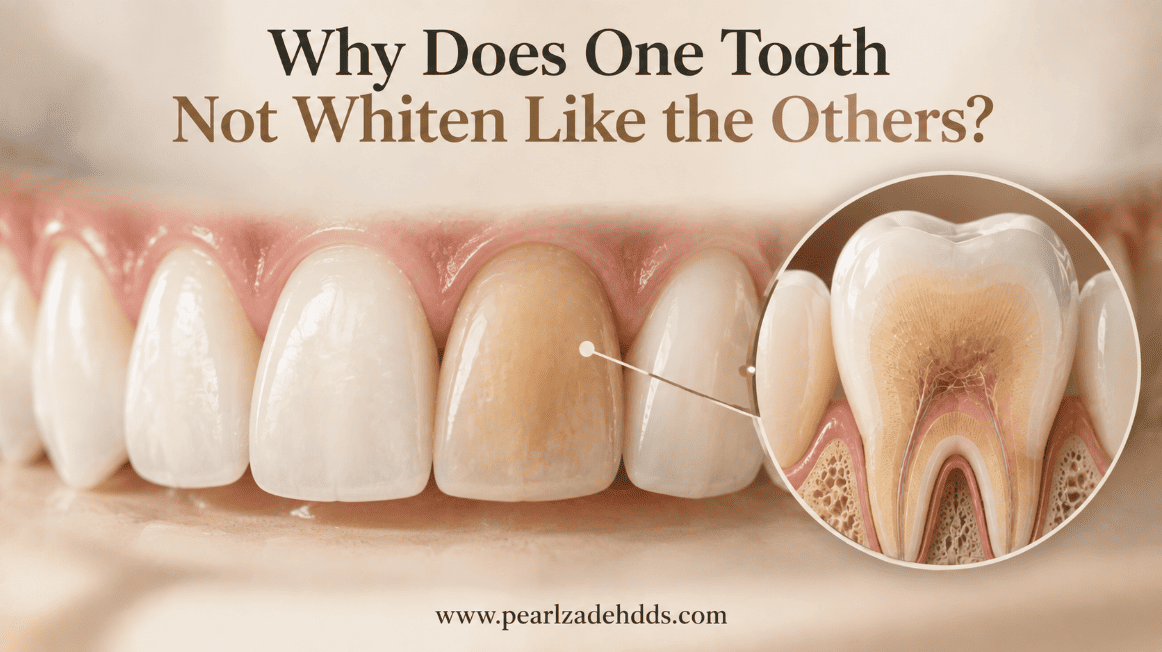
    Certain patterns are worth an evaluation rather than another round of whitening. One tooth becoming noticeably darker than the others, sudden discoloration that appeared quickly, discoloration that doesn’t respond to whitening at all, pain or sensitivity associated with a discolored tooth, or visible damage or changes to the tooth itself all fall into this category. Some discoloration has an underlying dental cause that whitening simply won’t address, and a professional evaluation is what actually determines what’s going on rather than guessing and whitening again.

    Speak With Dr. Pearl Zadeh About Teeth Whitening

    Whitening results naturally fade over time, but thoughtful habits and appropriate maintenance can help you hold onto your smile longer. Dr. Pearl Zadeh, an accredited member of the American Academy of Cosmetic Dentistry, can evaluate your teeth and discuss professional whitening options suited to your goals, without promising results that aren’t realistic for your specific teeth.

    Call (818) 716-6722 or click the button below to schedule your consultation online.

    Frequently Asked Questions

    How long does professional teeth whitening last?

    Results vary by patient, with research showing good stability for up to two years in many cases, though this doesn’t happen for everyone. Diet, tobacco use, and oral hygiene all affect how long results actually hold.

    How can I keep my teeth white after whitening?

    Consistent oral hygiene, limiting frequent exposure to staining foods and drinks, avoiding tobacco, and keeping up with regular dental visits all help extend your results.

    Can I drink coffee after teeth whitening?

    Yes, though coffee can contribute to staining over time. Using a straw, rinsing afterward, and not sipping it slowly over hours all help reduce the effect.

    Does smoking make whitening results fade faster?

    Yes. Tobacco use contributes to yellow or brown discoloration and makes maintaining brighter results noticeably harder.

    Does whitening toothpaste help maintain whitening?

    It can help remove surface stains between treatments, but it doesn’t change the underlying tooth shade the way professional whitening does.

    This article is for informational purposes only and is not a substitute for professional dental advice. Please schedule a consultation with Pearl Zadeh DDS to discuss your specific situation.
  • How Much Does Professional Teeth Whitening Cost in Woodland Hills?

    How Much Does Professional Teeth Whitening Cost in Woodland Hills?

    Cost is one of the first things people want to know before scheduling professional teeth whitening. It’s a fair question. The honest answer is that no single price applies to every patient in Woodland Hills.

    Several factors affect the final cost. These include your treatment approach and the number of sessions you need. Your starting tooth shade and the type of discoloration also matter. The condition of your teeth and gums can affect the price too. Existing dental work and your specific whitening goals also factor into the final cost.

    Our professional teeth whitening services are planned around each patient individually rather than priced the same way for everyone who walks in.

    How Much Does Professional Teeth Whitening Cost in Woodland Hills?

    Our current whitening fee is best confirmed directly with the practice. Publishing an unverified number here would not give you a reliable answer. General whitening costs vary widely between sources. Prices also depend on location, treatment method, and the provider. Giving one figure could create a false sense of precision rather than provide useful information.

    A national average or price from another city does not tell you what your treatment will cost. It cannot account for your specific teeth, goals, or treatment needs. It’s more useful to understand what drives the cost. That way, you know what questions to ask and what to expect after your dentist evaluates your teeth and provides a personalized quote.

    What Affects the Cost of Professional Teeth Whitening?

    The Type of Whitening Treatment

    Professional whitening isn’t a single procedure. Dentists use different approaches based on your needs and goals. These include in-office whitening completed in one visit and dentist-supervised take-home trays used over several weeks. In-office whitening typically uses a higher-concentration whitening agent. The dental team applies it directly to your teeth, often producing a visible change after one appointment.

    Take-home trays use a lower-concentration whitening agent. You apply them yourself over several nights under your dentist’s guidance. This approach spreads the whitening process over time instead of concentrating it into one visit.

    The materials and whitening agent concentration can affect the cost. The treatment setting also matters. You may receive treatment in the office or at home under professional guidance.

    The right method isn’t necessarily the most expensive or cheapest option. It’s the one that fits your goals, schedule, and dental needs.

    How Much Whitening You Need

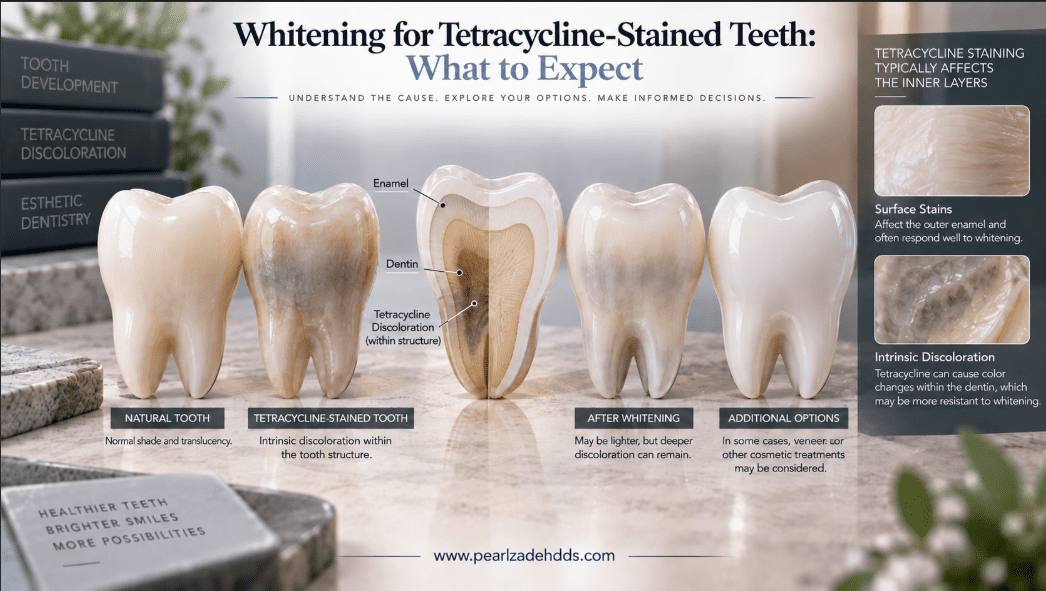
    Patients start from very different places. Some have mild surface staining that responds readily to whitening. Others have deeper discoloration that takes more time or a different approach to address. The American Dental Association notes that whitening can be effective on surface stains, but treats staining within the dentin layer very differently: removing that kind of deep, intrinsic staining through an external whitening procedure alone is considered close to impossible. Not every type of discoloration responds the same way, and no provider can honestly promise the same result for every patient walking through the door.

    Your Existing Oral Health

    A dentist typically needs to evaluate your teeth and gums before recommending whitening. Untreated decay, active gum problems, significant sensitivity, or cracked or damaged teeth can all affect whether whitening makes sense right now, or whether something else needs attention first. Whitening a tooth with an unresolved cavity underneath it, for example, doesn’t address the actual problem and can make it harder to monitor.

    Whitening isn’t something that should automatically happen before addressing an active dental problem. Our discussion of early signs of gum disease covers what’s worth watching for if you’re unsure where your gum health currently stands.

    What Is Included in Professional Teeth Whitening?

    Depending on the treatment approach, professional whitening may include a dental evaluation to check whether whitening is appropriate right now, treatment planning specific to your teeth and goals, professional-grade whitening materials that aren’t available over the counter, customization based on your particular sensitivity and discoloration pattern, professional application or supervision throughout the process, instructions for maintaining your results afterward, and follow-up recommendations when appropriate.

    A quoted price built around a genuine evaluation and a plan tailored to your teeth is a different thing than a flat fee for a generic product, even if the numbers happen to look similar on paper. Not every element applies to every treatment plan, and what’s specifically included in your case is something to confirm directly with your provider rather than assume from a general list like this one.

    Why Does Professional Whitening Cost More Than Whitening Strips?

    Professional treatments generally use stronger whitening formulations than what’s available over the counter, applied under a dentist’s supervision rather than on your own. The ADA confirms that professional whitening uses higher-concentration peroxide agents than over-the-counter products, which generally means visible change happens faster than it would with a lower-concentration product used at home. A dentist can also customize the approach and monitor for side effects along the way. Convenience matters too.

    A single supervised session accomplishes something that might take weeks of consistent at-home use to approach. This doesn’t mean professional whitening is always dramatically more effective for every patient and every type of staining. It means you’re generally paying for strength, customization, and oversight rather than the whitening product alone. Our comparison of professional and at-home whitening goes further into these differences.

    Does the Type of Staining Affect Whitening Cost?

    Yes, in a meaningful way. Surface stains from coffee, tea, red wine, or tobacco tend to respond well to standard whitening approaches, since they sit on the outer surface of the tooth rather than deep within it. Deeper, intrinsic discoloration, the kind that develops within the tooth structure itself, behaves differently and generally needs more time or a stronger approach to address.

    Age-related darkening happens gradually as enamel thins and the naturally darker dentin underneath becomes more visible. Certain medication-related staining, particularly from medications taken during childhood tooth development, can be especially resistant to standard whitening.

    Discoloration tied to past dental trauma or affecting a single tooth is its own category entirely, sometimes involving changes inside the tooth that external whitening simply can’t reach. In some cases, whitening alone may not fully resolve the concern, and a different cosmetic approach may be worth discussing instead. Our overview of cosmetic treatment options for stained teeth goes further into what else might apply depending on the type of discoloration involved.

    Can Crowns, Veneers, or Fillings Affect Whitening Cost?

    This is worth understanding before you start. Whitening changes the color of natural tooth structure. The ADA is direct on this point: only natural teeth can be whitened, not tooth-colored restorations like crowns, veneers, or fillings. If you have visible restorations, your dentist needs to consider whether your natural teeth will end up a noticeably different shade than the restored ones once whitening is complete.

    A front tooth with a crown sitting next to teeth that just got several shades lighter is exactly the kind of mismatch worth planning around ahead of time, not discovering afterward. This doesn’t mean restorations always need to be replaced after whitening, and it doesn’t mean whitening treatment changes the color of an existing restoration. It simply means shade matching is part of the conversation when restorations are involved, and it can affect what your dentist actually recommends.

    Does Tooth Sensitivity Make Professional Whitening More Expensive?

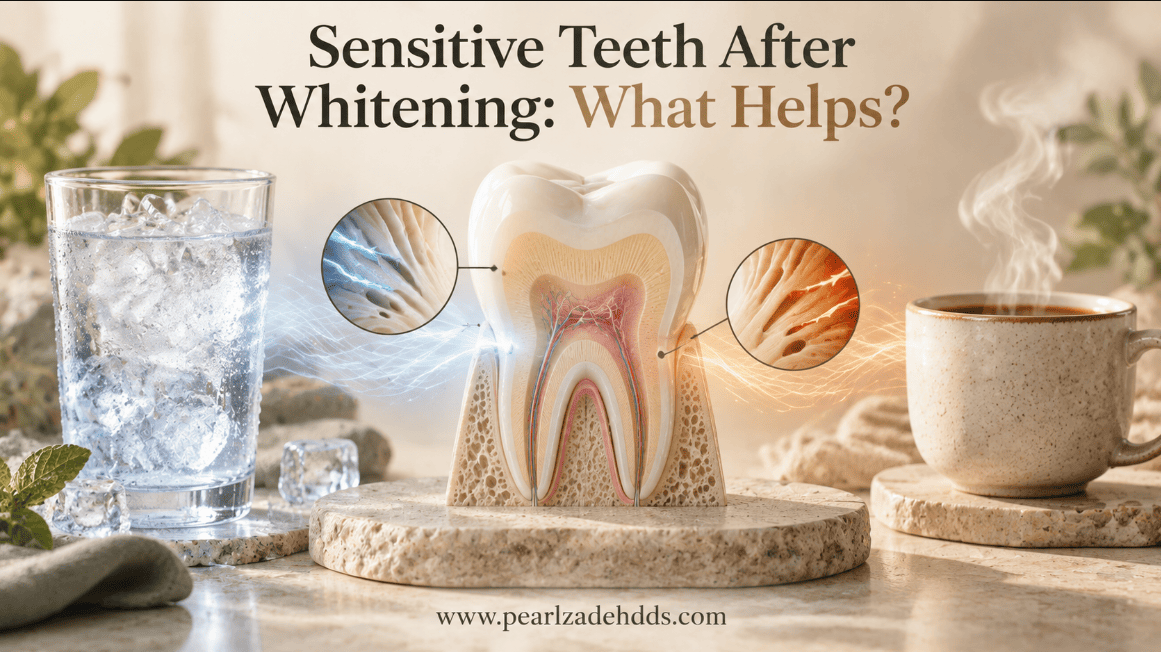
    Not automatically, though it’s a real factor in how treatment gets planned. The ADA identifies temporary tooth sensitivity and gum irritation as the most common side effects of whitening treatment. Existing sensitivity can influence which approach your dentist recommends, how the treatment is paced, or what concentration of whitening agent makes sense for you.

    A patient who already deals with sensitive teeth might do better with a lower-concentration approach spread over a longer period, rather than a single high-concentration session, even if that changes which specific treatment gets recommended. Sensitive teeth don’t automatically mean a more expensive treatment plan. They mean an individualized one. No provider can promise a completely sensitivity-free experience, but a thoughtful plan can help manage it, and any sensitivity that does occur is generally temporary.

    How Many Whitening Treatments Will You Need?

    This varies considerably based on your starting tooth shade, the type of discoloration involved, your desired result, the treatment method used, how your teeth actually respond, and how well you maintain results afterward. Some patients see the change they want after one session. Others need a follow-up treatment or ongoing touch-ups to maintain results over time, since whitening isn’t necessarily permanent and everyday habits like coffee, tea, or tobacco can gradually reintroduce staining.

    That maintenance factor is worth asking about directly, since it can affect the total cost of keeping your results over the following months and years, not just the initial treatment. No dentist can honestly promise a specific number of shades of improvement or a universal number of sessions before actually evaluating your teeth.

    Is Professional Teeth Whitening Worth the Cost?

    That depends on your goals, the type of staining you’re dealing with, your expectations, and whether you value professional supervision over a do-it-yourself approach. Whitening strips and whitening toothpaste are less expensive and more convenient for mild, gradual change, but they generally work more slowly and offer less customization than professional treatment. They also can’t account for existing restorations, sensitivity, or discoloration that needs a different approach entirely, since there’s no evaluation built into a box you pick up at the drugstore.

    Dentist-supervised at-home whitening sits somewhere in between, combining professional oversight with the convenience of treating your teeth at home. None of these options is universally better. What matters is which one actually fits what you’re trying to achieve, your budget, and your specific teeth.

    How Can You Find Out What Teeth Whitening Will Cost?

    The most accurate estimate comes from discussing your specific goals and dental condition directly with your provider. A few questions worth asking during that conversation: Which whitening method is being recommended for me? What’s actually included in the treatment? How many treatments might I realistically need? Are there any additional costs I should know about? Will my existing crowns, veneers, or fillings affect the plan? What should I expect after treatment? And what can I do to maintain the results once I have them?

    Speak With Dr. Pearl Zadeh About Teeth Whitening

    There’s no single price that fits every patient considering professional teeth whitening. Dr. Pearl Zadeh, an accredited member of the American Academy of Cosmetic Dentistry, can evaluate your teeth, discuss your goals, and help determine the right approach and current cost for your specific situation.

    Call (818) 716-6722 or click the button below to schedule your consultation online.

    Frequently Asked Questions

    How much does professional teeth whitening cost in Woodland Hills?

    Cost varies based on treatment method, the number of sessions needed, and your individual dental condition. The most accurate figure comes from a consultation with the practice.

    Why does professional teeth whitening have different prices?

    Treatment method, materials, the amount of discoloration involved, and whether existing dental work needs to be considered all influence the final cost.

    Is professional teeth whitening more expensive than whitening strips?

    Generally yes, since professional treatment uses stronger formulations under dental supervision, though the two options serve different needs and budgets.

    Does insurance cover professional teeth whitening?

    Cosmetic teeth whitening is generally not covered as a routine dental benefit, though coverage details can vary, so it’s worth checking directly with your insurance provider.

    Do crowns and veneers affect the cost of teeth whitening?

    They can factor into treatment planning, since restorations don’t whiten the same way natural teeth do, which may affect what approach makes sense for your smile.

    This article is for informational purposes only and is not a substitute for professional dental advice. Please schedule a consultation with Pearl Zadeh DDS to discuss your specific situation and current pricing.